Palestinians

Digg This
Reddit This
Stumble Now!
Buzz This
Share on Facebook
Bookmark this on Delicious
Share on LinkedIn
Bookmark this on Technorati
Post on Twitter
Google Buzz (aka. Google Reader)

Lest anyone doubt the direction and agenda of the Christian right, here is a clear statement of approval of John Jay that only Christians should rule the United States. So how could Jews with any sense of their own safety and security promote this extremism, welcome Christian extremists to Israel and take their funds for the settlements? Because the Israelis who take the money and support put their interests above those of American Jews, they don’t think American Jews should be living in America anyway they should be in Israel, they calculate that the threat against them from Palestinians, Arabs, Muslims is more immediate than the the chance that radical Christians could one day take over the American government.

Of course, this entire way of thinking is very misguided. It never pays to think this selfishly, it always comes back on your head. Better to think in terms of justice and liberty for all, the true American way.

Editor’s note: Robert Knight is a senior writer for the evangelical Coral Ridge Ministries and a senior fellow for the conservative American Civil Rights Union. He helped draft the “Defense of Marriage Act,” the 1996 law in which the federal government defines marriage as a legal union between one man and one woman, and is the author of “Fighting for America’s Soul: How Sweeping Change Threatens Our Nation and What We Must Do.”

(CNN) –

John Jay, the first chief justice of the Supreme Court, wrote in a letter to a friend, “Providence has given to our people the choice of their rulers, and it is the duty, as well as the privilege and interest of our Christian nation to select and prefer Christians for their rulers.”

via U.S. was born a Christian nation – CNN.com.

{ 0 comments }

Digg This
Reddit This
Stumble Now!
Buzz This
Share on Facebook
Bookmark this on Delicious
Share on LinkedIn
Bookmark this on Technorati
Post on Twitter
Google Buzz (aka. Google Reader)

Folks, I published this with Common Ground News Service. Here is a version of it from the Bali Times.

A Practical Path to Justice and an Independent PalestineAugust 16, 2010

By Rabbi Marc Gopin

The creation of an independent Palestine has been a dream dashed many times, but there may be a practical path forward emerging from a surprising place. I often heard the phrase “business is business” growing up in the 1960s among gritty American Jewish immigrants; my father said it all the time. It reflected old Jewish instincts to do whatever it takes to survive and feed “the family,” even when it meant dealing with people who disliked you – a lot.

What floored me is when my Palestinian partner, Aziz Abu Sarah, with whom I recently founded MEJDI, a social enterprise (business designed for a social goal), told me exactly the same words from his father! Aziz’s family and mine are not involved in our new business venture, but every innovation has implications for the political situation in Palestine, and we seek advice and reactions. I have been shocked by the positive reception in my right wing family to the idea of honest business as a bridge. And every time I asked Aziz, “Are you sure your family is ok with Jews and Arabs doing business given their terrible troubles? They know how Jewish I am?” The answer came, “Business is business.”

I feel very much at home with people who love their families, who see the virtue of work, who when facing an unjust situation recognise that practical and ethical people sometimes prevail. Sometimes honest work eases the way to a sane political vision that overwhelms self-destructive patterns of enemy systems and wounded peoples.

There is a lot of good news on the business front. There is a Palestinian prime minister, increasingly popular, who is revolutionising the infrastructure of Palestine, preparing for prosperity and statehood. Saudi Arabia, the most conservative state in the region, has just announced a US$400-million project for Ramallah. Many Western countries are pouring in huge funds for the private sector.

Will these investments benefit most Palestinians? We are all haunted by “the last time,” by the Oslo years of large funds – and large corruption. But thankfully a recent economic conference in Palestine, which included an American presidential delegation headed by Senator George Mitchell, slated $950 million for small- and medium-sized businesses.

My partners and I at MEJDI want more, however. We argue that more is needed to place justice at the centre of Palestine’s future, and to discourage an investor tendency to make a few wealthy and most miserable. All the incoming funds are good but we should explicitly support socially responsible business in Palestine.

Although there is no ultimate solution for Palestine without an end to the Occupation, small businesses are needed to form the backbone of a viable state. Small businesses generate a middle class that depends on the rule of law and democratic values, whereas countries supported only through large corporations and government control rarely emerge as democracies. Palestinians deserve a democracy at the end of their long struggle.

Here is an example of what we are doing as a social enterprise. We are pioneering both tours and academic seminars where almost every dollar spent is going to support and patronize businesses with a clear reputation for fair wages. Profits are also re-invested in lecturers and tour guides who are well known activists for positive social change.

This is just one example of the intersection of small business empowerment and social change. Our other major innovation is the distribution in the West of products made by poor but innovative Palestinian small businesses paying only fair wages. I have learned after 27 years of peace activism that ignoring inequality and poverty is disastrous and it violates every tenet of the region’s religious traditions and values. The un-sustainability of the average Palestinian family makes old ways of coexistence work inadequate. Serious attention to fair wages, however, and financial support for Palestine’s social change activists help engender support for Palestine’s nascent non-violent struggle.

Generations, even centuries, of Muslims and Jews, built mutually prosperous and equal relationships; we are merely recovering their legacy. There have been many times of misery in the long history of the Christian, Jewish, Muslim relationship, but there were also many good times, golden ages. Honest business based on good wages and equal relationships may be one glue that has bonded Middle Eastern cultures before, and may help make inevitable the political path forward towards a just and equal two-state solution.

Rabbi Dr. Marc Gopin, author of To Make the Earth Whole, is a principal of MEJDI LLC (www.mejdi.net).

via A Practical Path to Justice and an Independent Palestine.

{ 0 comments }

Digg This
Reddit This
Stumble Now!
Buzz This
Share on Facebook
Bookmark this on Delicious
Share on LinkedIn
Bookmark this on Technorati
Post on Twitter
Google Buzz (aka. Google Reader)

I will consider this helpful someday when the article indicates that the Chief Rabbis coordinated their visit with the Palestinian Authority and the Palestinian mayors of Jericho and Nablus. Then such a visit will be a helpful indicator of respect, mutual recognition, and cooperation. Otherwise it is just improved security for a better occupation, and is not contributing to a safe and just solution. Rabbi Froman, by contrast, always when he enters an Arab city, even with historic Jewish roots, always comes with respect for the occupants, especially the Muslim occupants. That is why his way is a way of courage.

Chief rabbis in rare visit to holy sites in Nablus, Jericho

By JONAH MANDEL

08/20/2010 03:00

First visits by high-ranking Israeli delegation in 10 years.

Talkbacks (4)

Israel’s Chief Rabbis Yona Metzger and Shlomo Amar conducted an unprecedented visit to Jewish holy sites in Nablus and Jericho on Thursday, ahead of the High Holy Days.

For the first time in 10 years, a high-ranking Israeli delegation came in broad daylight to Joseph’s Tomb in Nablus and the ancient Shalom Al Israel synagogue in Jericho.

The visit, the first of its kind since the IDF pulled out of Nablus and Jericho, was said to be the result of an ongoing dialogue between Rabbi of the Western Wall and Holy Sites Shmuel Rabinovitch and the head of the Civil Administration in Judea and Samaria Brig.- Gen. Yoav Mordechai, who organized the tour. OC Central Command Maj.-Gen. Avi Mizrahi and Judea and Samaria Division commander Brig.- Gen. Nitzan Alon also participated.

The rabbis prayed at the sites and were briefed by Mizrahi on the arrangements under which Jews can pray there. Both sites are in Area A and hence under Palestinian security responsibility.

The IDF cited the visit as another example of the improving security situation in Judea and Samaria, which can be credited, among other factors, to confidence-building measures led by the military, and the tightening of ties between the IDF and Palestinian security forces.

Metzger used the opportunity to speak out strongly against the phenomenon of clandestine nocturnal infiltrations into the Joseph’s Tomb complex.

Since the site was taken over by Palestinians in 2000, Jewish worshipers have been barred from entering during the day.

As of November 2007, monthly nighttime visits, coordinated with and secured by the IDF, enable busloads of Jewish worshipers to access the tomb.

via Chief rabbis in rare visit to holy sites in Nablus, Jericho.

{ 0 comments }

Digg This
Reddit This
Stumble Now!
Buzz This
Share on Facebook
Bookmark this on Delicious
Share on LinkedIn
Bookmark this on Technorati
Post on Twitter
Google Buzz (aka. Google Reader)

Excellent article, speaks for itself

Growing up in the West Bank, Mujahid Sarsur knew next to nothing about the Holocaust and saw little ground to sympathize with a people he saw as his occupier. 2010. But thanks to an Israeli roommate overseas, the 21-year-old Palestinian student learned about the Nazi murder of 6 million Jews during World War II and discovered a new understanding of his Israeli neighbors.Now he wants other Arabs to do the same. Sarsur heads one of a handful of Palestinian grass-roots groups seeking knowledge about the Holocaust.On Wednesday, he led a delegation of 22 students to Israel’s official Holocaust memorial, Yad Vashem. The students, fasting for Ramadan, listened closely to their Arabic-speaking guide’s explanations, and were left wide-eyed by the gruesome images of the death camps.

via Palestinians learn about the Holocaust at Yad Vashem – Haaretz Daily Newspaper | Israel News.

{ 0 comments }

Digg This
Reddit This
Stumble Now!
Buzz This
Share on Facebook
Bookmark this on Delicious
Share on LinkedIn
Bookmark this on Technorati
Post on Twitter
Google Buzz (aka. Google Reader)

Why is everyone so angry and appalled at this 21 year old Israeli woman? I think she is a perfect creation of a system. The fact that she sees nothing wrong with the photographs of her  smiling and proud with blindfolded humiliated Palestinian prisoners is absolute proof that it is not her but the system that has prepared her as a teenager to become an occupier, not a member of an elite army, but an occupier of civilians who must be humiliated because that is the essence of occupation. she merely said on Facebook what so many say to each other in the field now. How can we blame her for being simply an expression of a system that must corrupt her mind, not to mention punish whole populations? She is the reason that most of the world has come to hate Israel, not her personally but the system, the systemic political cowardice that guarantees generations of children like her living an apartheid that will fall apart around them one day leaving them in total shock, just as this girl is in total shock about what all the fuss is about. I feel a certain clarity emerging. This is as far away from the illusion of the Halutz as one can get, and it is not sustainable for much longer.

I only hope the young Palestinians can resist revenge because with time the change is coming. This is what Gandhi and King taught their people, it is the hardest lesson of all, but history proved both to be right, the wait was worth it. I hope and pray that as they do achieve more power there exists enough of an alliance with Jews that creates the basis for a livable two state solution, and not an opportunity for revenge for all the horror that has been visited on them. There may come a day when progressive Jews will be the only ones in a strong position to create a bridge between a wounded and angry Palestinian State and the State of Israel.

An appalling army experience

The humiliation of Palestinian detainees must not be remembered as the ‘best time’ of any soldier’s army experience.

Haaretz Editorial

Eden Aberjil doesn’t understand what all the fuss is about. The former soldier sees nothing wrong with posting photos on her Facebook profile showing her posing, grinning and amused, alongside blindfolded Palestinian detainees. “The pictures reflect the military experience,” she told Army Radio this week of her online photo album, entitled “The army: the best time of my life.”

Even more disturbing than the images – which depict the detainees as house pets – is Aberjil’s failure to understand the uproar they have caused. Whoever photographed her (other troops were likely there – it’s doubtful one soldier would be tasked with guarding all of the detainees ) also presumably saw their performance art as no more than a lark.

But Aberjil’s “experience” is reflective of a culture that has taken root over the course of decades of occupation, one which perceives Palestinian prisoners as subhuman – objects of amusement at best and at worst, abuse. It is a culture that gives rise to appalling conduct like forcing inmates to dance, sing Israeli patriotic and military songs, or photographing them as a hunter would his conquered beast. These “experiences” are no different than those of American soldiers abusing Iraqis in Abu Ghraib prison, pictures that shocked the world when exposed in 2004.

via An appalling army experience – Haaretz Daily Newspaper | Israel News.

{ 0 comments }

Digg This
Reddit This
Stumble Now!
Buzz This
Share on Facebook
Bookmark this on Delicious
Share on LinkedIn
Bookmark this on Technorati
Post on Twitter
Google Buzz (aka. Google Reader)

The creation of an independent Palestine has been a dream dashed many times, but there may be a practical path forward emerging from a surprising place. I often heard the phrase ‘business is business’ growing up in the 1960s among gritty American Jewish immigrants; my father said it all the time. It reflected old Jewish instincts to do whatever it takes to survive and feed ‘the family’, even when it meant dealing with people who disliked you – a lot.

What floored me is when my Palestinian partner, Aziz Abu Sarah, with whom I recently founded MEJDI, a social enterprise (business designed for a social goal), told me exactly the same words from his father! Aziz’s family and mine are not involved in our new business venture, but every innovation has implications for the political situation in Palestine, and we seek advice and reactions. I have been shocked by the positive reception in my right wing family to the idea of honest business as a bridge. And every time I asked Aziz, “Are you sure your family is ok with Jews and Arabs doing business given their terrible troubles? They know how Jewish I am?” The answer came, “Business is business.”

I feel very much at home with people who love their families, who see the virtue of work, who when facing an unjust situation recognise that practical and ethical people sometimes prevail. Sometimes honest work eases the way to a sane political vision that overwhelms self-destructive patterns of enemy systems and wounded peoples.

There is a lot of good news on the business front. There is a Palestinian prime minister, increasingly popular, who is revolutionising the infrastructure of Palestine, preparing for prosperity and statehood. Saudi Arabia, the most conservative state in the region, has just announced a 400 million dollar project for Ramallah. Many Western countries are pouring in huge funds for the private sector.

Will these investments benefit most Palestinians? We are all haunted by ‘the last time’, by the Oslo years of large funds – and large corruption. But thankfully a recent economic conference in Palestine, which included an American presidential delegation headed by Senator George Mitchell, slated $950 million for small and medium sized businesses.

My partners and I at MEJDI want more, however. We argue that more is needed to place justice at the centre of Palestine’s future, and to discourage an investor tendency to make a few wealthy and most miserable. All the incoming funds are good but we should explicitly support socially responsible business in Palestine.

Although there is no ultimate solution for Palestine without an end to the Occupation, small businesses are needed to form the backbone of a viable state. Small businesses generate a middle class that depends on the rule of law and democratic values, whereas countries supported only through large corporations and government control rarely emerge as democracies. Palestinians deserve a democracy at the end of their long struggle.

Here is an example of what we are doing as a social enterprise. We are pioneering both tours and academic seminars where almost every dollar spent is going to support and patronize businesses with a clear reputation for fair wages. Profits are also re-invested in lecturers and tour guides who are well known activists for positive social change.

This is just one example of the intersection of small business empowerment and social change. Our other major innovation is the distribution in the West of products made by poor but innovative Palestinian small businesses paying only fair wages. I have learned after 27 years of peace activism that ignoring inequality and poverty is disastrous and it violates every tenet of the region’s religious traditions and values. The un-sustainability of the average Palestinian family makes old ways of coexistence work inadequate. Serious attention to fair wages, however, and financial support for Palestine’s social change activists help engender support for Palestine’s nascent non-violent struggle.

Generations, even centuries, of Muslims and Jews, built mutually prosperous and equal relationships; we are merely recovering their legacy. There have been many times of misery in the long history of the Christian, Jewish, Muslim relationship, but there were also many good times, golden ages. Honest business based on good wages and equal relationships may be one glue that has bonded Middle Eastern cultures before, and may help make inevitable the political path forward toward a just and equal two-state solution.
Published in Common Ground News Service, http://www.commongroundnews.org/article.php?id=28228&lan=en&sid=0&sp=0&isNew=1

{ 0 comments }

Digg This
Reddit This
Stumble Now!
Buzz This
Share on Facebook
Bookmark this on Delicious
Share on LinkedIn
Bookmark this on Technorati
Post on Twitter
Google Buzz (aka. Google Reader)

Chaim Pearlman in court Wednesday.

via ‘Not enough evidence to convict suspected Jewish terrorist Pearlman’ – Haaretz Daily Newspaper | Israel News.

Helping Jews move beyond the Holocaust to the Rule of Law

You see this face? This is the face of an angel. I see the face of an angel. This is what I spent most of my life thinking of and dreaming of as the face of an angel. His name means ‘life’ and I grew up feeling that he was preserving the ‘life’ the soul of our people. That is what we were doing in Kollel, the learning halls of perpetual study. I grew up worshiping the Ben Toah, the student of Torah, a young person of study, humility, gentleness, that has  been a prototype of ideal Jewish life going back thousands of years. He has early ancestors in generations of youth going  back to the great cities of Babylon, let alone all the major cities of Europe, West and East. He is embedded in my ideal self. I see him and I see calm, insight, thoughtfulness, intelligence, I see the character of Danny in the Potok’s The Chosen, and Motel the Tailor, of Fiddler on the Roof, all wrapped into one, gentle, learned, thoughtful, sensitive.

So how does this face of an angel become a racist and a murderer? Easy, bad teachers, bad philosophies. You can’t tell me he has had a harder life than 2000 years of pious young men in Eastern Europe and elsewhere. But for me losing him, turning against him, insisting that there actually be the rule of law in Israel so a man like this can stay behind bars the rest of his life, be deprived of life, the way that he deprived so many others, this is hard for me emotionally–and for millions of Jews who refuse to enforce the rule of law in Israel and Palestine. So I ask my readers to understand that the death of Potok’s Danny and Sholom Aleichem’s Motel is a hard death for us. The Nazis killed their bodies but this man has killed the soul of that Jewish archetype. We need to evolve a new set of archetypes of piety and decency, and it is not easy to face this.

{ 0 comments }

Digg This
Reddit This
Stumble Now!
Buzz This
Share on Facebook
Bookmark this on Delicious
Share on LinkedIn
Bookmark this on Technorati
Post on Twitter
Google Buzz (aka. Google Reader)

Folks, many of you may have seen this, but we have friends in the world who cannot directly access the Jerusalem Post piece. So here it is. Lauren is an amazing interviewer. She interviewed me for nine hours, longest interview of my life:

The lonely man of peace
lonelymanofpeace

By LAUREN GELFOND FELDINGER

21/01/2010

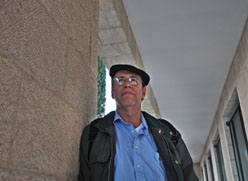
This week, Orthodox American rabbi Marc Gopin saw his coexistence work in Syria bear fruit. What turns a Soloveitchik disciple into an unofficial diplomat to the Arab…Somewhere between the shtetls of Eastern Europe and sites across the Levant, Rabbi Dr. Marc Gopin, 52, has found his calling.

Heading the George Mason University Center for World Religions, Diplomacy and Conflict Resolution in Arlington, Virginia, he is not waiting for a peace treaty to cause change. Gopin gets on a plane and heads for trouble spots wherever he can find openings. He meets with sheikhs, heads of state and business people across the Arab world, especially in Syria.

In the US, he consults on conflict resolution for international intelligence officers and trains Pentagon officials and army chaplains on their way to Afghanistan. In 27 years studying conflict resolution and meeting as an unpaid ambassador with Jews and Arabs, he has discovered that enemies can often be quickly made into allies. Issues of respect, civility, honor, tolerance and respecting cultural norms can have transformative and sometimes immediate effects, he says.

The offspring of Eastern European hassidim, he grew up in Boston in the 1960s. During his youth, he rarely met non-Jews or non-Orthodox Jews and studied Torah seven days a week. Shabbat was spent in synagogue, praying in the shadow of Rabbi Joseph Soloveitchik, the scholar and leader of American Modern Orthodoxy who believed that Jews should be pious and learned in rabbinic studies, science, math and secular philosophy. At Gopin’s bar mitzva, Soloveitchik publicly declared his adoration of the boy. Gopin replied that he hoped to live the rest of his life studying at the heels of his great, holy and beloved master. Their friendship continued until Soloveitchik died in 1993.

His mentor is remembered as “The Lonely Man of Faith,” the title of one of his major essays on the ontological struggle to mix duties of religious piety with observing Jewish law in a modern world. Gopin feels he is walking in Soloveitchik’s footsteps as he travels the region, connecting with people many in the West would consider his enemy.

One such “enemy” is Syria’s grand mufti, Sheikh Ahmed Hassoun, who on Tuesday addressed a “delegation of American academics” (read: Gopin and his cohorts) and was quoted by Army Radio as stating, “… Before you got American citizenship, and I got Syrian citizenship, we were all brothers under the dome of God.”

Gopin has met with the mufti on several occasions, which perhaps paved the way for these ground-breaking words from Syria’s foremost religious leader. But Gopin’s ideas and practices have isolated him in the Orthodox world and in the conflict resolution world.

While visiting Israel to teach classes on religion and conflict resolution, on his way to Syria with 20 citizen diplomacy doctoral and master’s students who have since met with the mufti, Gopin told The Jerusalem Post how to improve prospects for peace and what that has to do with Judaism.

What takes an Orthodox rabbi to Syria?

I met [Syrian lawyer] Hind Kabawat at the World Economic Forum in 2002 in Jordan. She is this tall woman in a room full of mostly Arab [men] and raises her hand and wants to know what can be done so that all people and regimes will commit to human rights for all people in the region. I was shocked because I expected her to say something against Israel. So I said to myself, [maybe] she was a partner that I had been looking for in the Arab world. We met later and talked a long time.

A few months later I sent her an e-mail that I was going to be in the region. She invited me. I went because I had an opportunity to do something in citizen diplomacy. Since 2003, I have been to Syria six or seven times. Hind and I now have a partnership. We are training professionals in conflict resolution and negotiations. Tens of millions in the Arab world saw televised debates that gathered the grand mufti of Syria [and] secular representatives to model a culture of debate – a way for civil society to grow while addressing difficult issues.

How did you feel when you first stepped foot on Syrian soil?

I was absolutely terrified. I had no idea that things were safer in Syria than Jordan or Egypt because the government is much more in control. Hind drove four hours from Damascus to pick me up in Jordan. I crossed the border in the middle of vast plains at midnight. It was very dark and I could [imagine] all the armies and prophets [of history] passing through, back and forth.

I went to the VIP lounge on the border. A wonderful young man from the government came to drink bitter coffee with me and I saw that as a good sign. He said, “Our president has been trying to contact the Israeli prime minister for three years to talk about peace. He is wondering when there may be a reply.” I was in shock and clarified that I am not an Israeli ambassador, but that I would tell everybody.

My life was never in danger and I was treated like an honored guest everywhere I went. For me, going to Syria is a straight line between rabbinic texts that were part of my soul, to ancestral lands important to Abraham, such as Aram, 3,000 years later. It felt like I was coming home. I told the Syrians that on my first visit, when they honored me by having me speak at the Assad Library. They were very moved.

When you go to places and you make yourself vulnerable and listen, you learn much more than you can learn in books.

What was the most dramatic moment during your Syria trips?

Two or three years into my work in Syria in 2006, during the Second Lebanon War and while the US was weighing an attack against Syria, it was a terrible time to be there, and all the refugees from Iraq were outraged at the US for creating four million refugees and 1.5 million orphans, which could have been avoided.

I sat with the grand mufti of Syria on several panels and there were amazing public ceremonies and conversations, but the war in Iraq was so close and the mufti was beside himself about the number of Shi’ites and Sunnis killing each other. He invited me to Aleppo, a four-hour trip from Damascus. It was nerve-racking driving around the country. He brings me to a room in a mosque with a few hundred people – one was in Abu Ghraib for four months [and had been tortured].

Suddenly I stood up and interrupted the mufti’s speech. I could not help myself. The whole room goes silent; everyone gets uncomfortable. My translator rises and comes with me and I ask the man what his name is, and he tells me his brother is still missing and where they were taken from by the American forces. I say that I want to apologize in the name of the American people. I held his hand and asked for his info and his brother’s info to send it to anyone I know. The mufti was very moved and continued his sermon.

Then he goes to the main ceremony and has me go to the balcony. I see 3,000 people. The mufti does his ceremony and prayers and then he starts crying. “Politicians and leaders are going to destroy the world,” he says. And then he announces, “Now we will hear from a man of God from America. This man apologized, why can’t we apologize when we do something wrong?” He puts me up front and I speak for two minutes about how grateful I am for their saintly mufti and I quoted from the Torah about forgiveness and nonviolence; I said it was from “the Bible.” The crowd – half were refugees from Iraq – objected, asking, “Why did you bring him here? He voted for Bush.” I was shaking like a leaf. I said, “I didn’t vote for torture.”

The mufti said, “Tell the people what we’ve done here today,” and about 10 people took out their cellphones and took snapshots. It headlined the news across the country – “American apologizes for Abu Ghraib.”

I was told through indirect means that [President Bashar] Assad said: “What happened in the mosque means more to me than anything the American president can say.” I went back to Damascus but heard that the mufti was very happy and later told the crowd that I was a Jewish rabbi. The mufti is not a pacifist, but is against the jihadis and all people who always want war – he demonstrated that apology is a way forward and not just war and revenge.

Is it okay to say sorry if you don’t think you are the only one to blame?

In Judaism, the capacity to say sorry is a supreme mitzva. It doesn’t say only if you are the only one who has done anything wrong.

Are you ever introduced or embraced as a Jewish person or rabbi?

I’ve been introduced as a rabbi many times, depending on the environment. On a panel with a Sunni, a Shi’ite, and a Protestant, I was “the rabbi.” It meant a lot to them.

[On the first trip, Hind and I] met with Shi’ite Sheikh Shehadeh Jahdai. She didn’t tell him I was Jewish, but we had such a [good] conversation, we were finishing each other’s sentences. I felt close enough in the end and said, “I have to tell you that I am a rabbi.” His eyes lit up. “There is no peace without rabbis,” he said. Since then I’ve learned that rabbis and imams used to work together on legal disputes all over the region.

People ask, do you know this family from Brooklyn? At the same time as being anti-Zionist, they felt a deep sense of loss of the Syrian Jewish community that was part of a brighter time when things were more pluralistic.

How did Yasser Arafat, in his day, react to your citizen diplomacy efforts?

Rabbi Menahem Froman had been trying to persuade the sides that religious clerics could be helpful in the peace process and he wanted Arafat’s blessing. After 20 minutes talking about the spiritual and beauty and the future of Jerusalem, I said, “I know how many children have died since the intifada and I wanted to apologize, because in Judaism it is a halachic obligation to comfort mourners.” His eyes moistened.

In traditional cultures you speak through text; this is true in Islam and traditional Judaism. So I told Arafat, “I want to share from my tradition, which says that the world stands on three things – truth, peace and justice. [But] without justice, there is no peace; and where there is no peace there can be no justice.”

He was very sharp; he knew that the Jewish community talked about peace, not justice. He also knew I was commenting on his choice of using violence by how I phrased the rabbinic text and how I looked into his eyes. We were practically eyeball to eyeball. He was silent and then said: “When I was a young man, I used to pray at the Wall with the old men.”

Why is that significant? It doesn’t matter if he was really there, but he was saying to me as a rabbi that he considered the Wall a holy place.

How do you square that with when he had said in Camp David a few months later that there was no Temple?

This is how I see it: The reports from Camp David were [that] Arafat and Barak didn’t speak most of the time. I heard that Barak came with a plan, threw it on the table in front of Arafat and said, “Here. This is what I’ll say and this is what you’ll say,” and that Arafat left the room because the behavior was insulting. What Israelis, Americans, must understand is that people take revenge when you don’t give them respect. Arafat lied with ease when he felt there wasn’t respect. I won’t say you could have gotten him to change, but I’m saying that how he was treated influenced how he behaved.

How did your family feel about you visiting Arafat?

One Saturday night, I was at havdala at my sister’s apartment [in Jerusalem], and after she hits the button to play the answering machine. Rabbi Froman had left me a message: Be ready to meet Arafat at 11. A room full of very Orthodox people – their mouths dropped. My cousin said, “I don’t know or understand what you are doing, but I trust you.” He trusted me because I had shown so much respect for their Judaism all those years.

What role does respect play in conflict resolution?

In the Talmud, it says, “Who is honored? He who honors others.” The act of honoring allows people to get past wounds and rage. Issues of civility, patience, respect and honor are at the core of what can go right or wrong in a negotiation. It’s not everything, it can’t replace bargaining, but negotiating without values of cultures and spiritual traditions amounts to nothing. Other respected scholar practitioners, like John Paul Lederach, also came to the same conclusions, and this is what most leaders have not understood when sitting with the Palestinians.

I’m convinced that we must train the Border Police, courts, diplomats – everyone that has to do with Palestinian relations – to figure out respectful ways to deal with complicated situations. I can’t tell you how many officials in the Arab world have told me – ambassadors, former ministers – that everything is about respect. I used to think it sounded like a platitude, but now that I’ve seen it in action, I understand it is a different way of negotiating.

The problem is that everyone in the Jewish and Arab world thinks being soft creates the impression of weakness. The thing is that in the history of human relations, there are different approaches to win over enemies. In the [Far East] being soft is the way to victory, as seen for example in The Art of War by Sun Tsu and the Tao Te Ching. In Eastern philosophy the argument is that what looks weak is strong – water breaks rocks over centuries, but rocks look strong but can easily be broken.

Do these values have a place in a military?

In the late ’90s, general Nasir Yussef was in charge of one of the security services; he was the only one in the PA who was a religious Muslim. We crossed Erez to Gaza City. [Yussef] knew it wasn’t easy for us to come. Woody Allen says 99 percent of life is showing up. That’s true with Arab partners, they know how difficult it is and it creates incredible gratitude. We met to brainstorm how to enforce law with understanding and appreciation of culture and religion, against competing Palestinian forces. [Yussef] was excited. Then the intifada broke out and the opportunity was gone – he was out of power.

Militaries needs to be greater attuned to maximize saving lives, build relations with locals and minimize civilian casualties. I periodically lecture Congress [and] have a lot of students from the Pentagon, intelligence agencies and military, and in turn interesting developments are happening in strategy. Military chaplains are contracted to study in my program and then go to the field and advice military commanders. For example, a senior fellow at my center was a former mujahadin in Afghanistan; now he is on contract with the American military. One American Air Force chaplain asked me, “Why plan to serve ‘American’ interests? Why not say to serve humanity’s interests?”

These people are high up and their level of military strategy is revolutionizing the battlefield in Afghanistan. They will work with local religious leaders to rebuild. [This kind of training is] where my hopes lie for Israeli and Palestinian militaries.

What is your hope for diplomacy?

The real peace work is a chess game; it’s all about moves and countermoves. If Israel wanted to commit to repair and build mosques that have been destroyed, this could be negotiated – first Israel rebuilds two mosques, then Palestine honors or beautifies Jewish spots in Palestine. [Or] you can propose at about five checkpoints, for example, that Palestinians will have oversight and commit to oversee people’s needs, and ask what would you do in return? Israel can ask, for example, for one bus a month to Joseph’s Tomb as a gesture of friendship, as some gestures speak to the Jewish heart and cause people to think differently.

At the same time, Israel has to prepare the people. If we engage, we can guarantee people in the Arab world would try to stop this. There will be casualties and we will respond in turn. We have to expect and prepare for bombers, but discredit them – that’s what happened in Ireland. If George Mitchell was allowed, he would come with a series of steps.

The ambassador from Syria is moving in the right direction by inviting Syrian Jews. If they had taken [Rabbi Eliahu] Bakshi-Doron’s suggestion to visit holy graves in Syria, it would not be official but would be a welcome gesture of tolerance and then we could, for example, welcome Syrians to visit their relatives on the Golan. There are all sorts of possibilities.

[And] if we made peaceful Muslim clerics into partners to build Arab-Israeli society, to create new relations by embracing highest values that mean something to Christians, Muslims and Jews, this would be a remedy.

The big problem is that the culture of diplomacy finds nothing positive or relevant in religious cultures. In Syria, when you outdo people in their customs, they are shocked and amazed; you become allies in a second.

What would prevent Israel from using the diplomatic strategies you suggest?

The right-wing lobby is extremely powerful in Congress to prevent really bold steps and there are forces dead set against a Palestinian state. There was no effective lobby against Irish peace.

You have suggestions for diplomats and military and government officials; any words of wisdom for liberals who support the peace process?

If everybody in Tel Aviv had an Arab person for dinner, we wouldn’t have these problems. These people who voted liberal have not found their way to the Arabs. This is about human relations, and the rabbis understood this 2,000 years ago.

What have you learned about conflict resolution that surprised you?

I was a rabbi in Berkeley when the first intifada broke out. There was a picture in The New York Times of soldiers beating unarmed Palestinian kids. I called a meeting with the Jewish community. Extremists in Brooklyn threatened me six times, with things like “I’ll make your wife a widow.” Clerics in general don’t have the role of being teachers as they used to because they are at the mercy of their congregants. I have learned over the years that peacemaking has to be positive, as Martin Luther King did it. The positive way would have been to build relations between my community and Arabs and Muslims and then if we were attacked, we would be attacked for being loving; not for humiliating.

How would this slow process of giving honor and taking turns making steps work in emergency situations, say Sderot and Gaza?

You can’t say to your people I’m not going to do anything, so if they shoot, you have to shoot too, but there is no escaping Rabbi Soloveitchik’s basic position. You have to calculate what is going to save the most lives; you can’t just say how to return a Grad rocket. You have to consult a wide variety of experts.

The problem with policy is that it is not intelligence that is in charge, but political leaders looking for votes. Really winning involves winning over people, and you cannot do that with brutality. [During the escalation] was not the time to ask why are they bombing; the time to ask if you have outsmarted Hamas is before putting them on the defensive. How to win against Hamas is to ask what is its source of its strength. And the answer is not badly made weapons, but despair of the people [and] that mothers have day care and social services funded by Hamas.

In the Middle East radicalization grows where social services don’t exist. So if you want to win, start city by city creating alternatives and see what happens. I would show Hamas as oppressors [and] make [Palestinians] jealous of the West Bank. What looks hard is actually smart. It’s easier to smash heads but harder to make people love you.

Israel has to compete for Palestinian love?

We created an amazing home for Jewish people but also made terrible mistakes. It doesn’t mean that we know that Arab leaders would not have made the same mistakes; we can think about them and move forward from the tragedies of the past. Is Israel responsible for the Iranian Revolutionary Guards and clerics in Riyadh and al-Qaida? Absolutely not. But 90 percent of the sick suicide bombers are Muslim, so if Israel becomes a champion of Palestinian rights, there is no question where people will affiliate. If the PA builds social services, there is no question where people will affiliate.

What is the hardest part of diplomatic work?

The hardest part of my work is that I meet all these beautiful people in Palestine, Israel and Syria, and every time there is another war, they are under the bombs and I can feel their pain and their children’s pain. During Lebanon, I was getting calls from Rabbi Froman saying, “People from northern Israel are in my house, please help.” He thinks I can talk to the president; holds the phone so I can hear the shooting. Hind, my Syrian partner, calls me from Damascus saying, “I have people in my house from Lebanon, you have to do something.” Sheikh Bhukari’s daughter was caught in her house in Gaza and afraid to close the windows, that the glass will shatter and tear her children apart. Everyone is suffering and I can’t do a thing.

You spent your life studying Jewish law and literature, with respected rabbis and professors. You were ordained as an Orthodox rabbi and observe kashrut and Shabbat and study and teach Torah. But many Jews consider your ideas about Judaism and conflict resolution unorthodox. Why?

I don’t affiliate with movements. I think Judaism’s most important spiritual values involve social justice. I find comfort in texts that show that in halachic Judaism. I have a problem with the people who made the details of ritual and outer symbols the essence. I am concerned with the commandments of love they neighbor, save lives, pursue justice and pursue peace. These are the hardest and most all-consuming life tasks.

So if I have time left over after that to figure out what is the exact ingredient necessary to make the blue thread on a tzitzit, that is interesting, but I don’t have time. How does anyone? How does anyone have time to figure out anything except how Jews can stop killing and be killed?

In 1987, after seven years of studying sources of peace in talmudic Judaism, I was, as an Orthodox rabbi, speaking in Palo Alto about a section in the Jewish laws of civility, that is not studied anymore today, but are the backbone of Pirkei Avot, and that I wanted to revive. I’m talking about rabbinic sources, and an Orthodox Stanford professor there, a PhD, whispers loud enough for me to hear, “He sounds like a Christian.” This was a turning point in my life – I understood that the universe that I’d grown up in was gone and that this was the new universe of militant Orthodoxy.

In DC, with an assimilated Israeli who had written book about Chechnya, I talked about “love your neighbor,” according to Rabbi Akiva, the highest mitzva. He says, “No, that’s in the New Testament.” This proves how successfully this sick culture destroyed the idea that love was a Jewish value, so much so that an intelligent, kind Israeli writer could believe that an idea from Torah, in Leviticus, is not Jewish.

In 1967, mainstream Judaism changed. The word bitahon [security] used to mean trust in God; now in modern parlance it means “national security.”

When Rabbi Soloveitchik embraced – after 1967 – Israel as a sacred thing, it was a real struggle. There were no prayers for Israel when I was growing up. We talked about “the Yishuv,” and “love of the Land of Israel” not “the state” or Jewish sovereignty.

In the 1970s there was pressure, the hermeneutics I had grown up with evolved from Rabbi Soloveitchik, Hermann Cohen, [Samson Raphael] Hirsch and the chief rabbis of England, who make ethics the central component of Judaism. I spent my lifetime figuring out what are the meanings of apology, repentance, forgiveness. How to follow the rabbis’ definition of heroism is how to make someone who hates you love you.

I’ve seen it being done and those who do it are the most disrespected people in Israeli culture and in Orthodox Judaism, so I don’t know what is Orthodox Judaism anymore. Suddenly ethics and piety are translated into the suckers who walked into ovens, the loser Jews. The focus is on the overwhelming power of the Jewish state. The most powerful army overtook Judaism, first the Orthodox, but later also the Reform and Conservative. So much so that when someone wants to be a pacifist, he turns to Buddhism or Unitarianism.

It is written that “he who returns evil for evil, evil will never pass from his house.” That text will disgust [the new Jew] because it sounds like sucker Jews who went to their death. When I say that a strong man can make his enemy love him, he will reply that it’s got to be a quote from Christianity. I became alienated from this increasingly militant Orthodox Judaism and with the secret world of Rabbi Soloveitchik’s ethical humanism disappearing. Judaism has been taken over by a state, and Jews, who after 2,000 years that Judaism was about piety and righteousness, are unprepared for the shocking power of the state to recreate a religion. The point is that considering the military or the state as sacred is idolatry. Only God is supposed to be sacred.

Are there other Orthodox rabbis or leaders who think like you?

There are a number of others, but extremely few of them have made the journey past hate of their Palestinian and Arab neighbors to their enemies to understand the full extent of the tragedy. The vast majority of Jewish liberals have not done it. In the last 10 years there has been a resurgence of interest in social justice, for example at Yeshiva University. I spoke at Stern [College, YU's school for women] last year. But there is no replacing the agony of meeting enemies and then thinking about it. The last 10 years I started collecting texts on peace and war – what does Judaism have to say about anger, love, hate, repentance and thousands of [related] things. People don’t study this anymore or they do and keep it in a racial context of what do we owe to fellow Jews.

Judaism was changing all the time based on how people were behaving and how the community was judging this behavior, which means that everything is dynamic. This realization is hopeful and scary. Judaism can become saintly and heroic or diabolic and genocidal. All religions can be saintly beacons for the world and can produce the best peacemakers or the worst criminals, all of whom believed that what they were doing was right. We have to face this.

What is misunderstood?

In Tosafot, the grandchildren of Rashi, commentary and Ecclesiastes, God seeks those who are chased. It doesn’t say God sides with the righteous or poor, but the persecuted and the pursued. It’s clear: It is better to be among the persecuted than the persecutors.

I knew that the Rambam and Rabbi Soloveitchik intentionally studied math, science and literature to reach the highest understanding of God, but in America I saw this secularized into ambition and materialism. I started becoming more attached to [philosopher] Samuel David Luzzatto. In 1847, [he] trained 50 years of Padua rabbis in Italy, and talks about “love your neighbor,” and the mitzva to teach that all humans are brothers of same family. I’m reading in Italian, and then I read it in Hebrew and oh my God, a 1957 Hebrew translator said “all Jews” not “all humans” are part of one family.

I looked at all the versions in rabbinic Judaism of Aaron the high priest, the supreme peacemaker, according to the midrashim. He was the most beloved and tells neighbors that the other is sorry and apologizes. This is similar to the contemporary theory of “appreciative inquiry” that never says a negative word. I discovered that this is a good way to deal with violent people and situations.

We in conflict resolution find that when you emphasize the positives, you can build something remarkable with even the most difficult people. That’s what Aaron did; he reminded the warring parties that there is something to love about each other. We remind Jews that from Iraq to Morocco, rabbis and imams used to work with each other, take care of each other, even study together.

On one hand this is selective perception, choosing only the good memories. But wars [have been perpetuated] with Arabs by only selecting the worst memories. We need to face the good and bad of history and try to build on the good to restore it. If you study the sources of how humans tick, you can’t get to the reasonable discussion until you face the emotion. Rabbis understand that. It takes a lifetime to realize that 90 percent of conflict resolution is the ability to articulate the different things people have inside – the fancy, intellectual term for this is “reframing.”

What was it like growing up in the shadow of Rabbi Soloveitchik?

I miss that Orthodox piety so much, it’s gone. My hassidic family attached itself to a holy man who was a mitnaged. Rabbi Soloveitchik was my life. My father gave me over to him; my father loved me intensely but wasn’t a man of words. The Rav was uncomfortable with the idea of being a holy man. His ideal man was a learned teacher; he did not worship other people or want to be worshiped, but did worship our capacity to think. In the study of the sacred, the irony is that you get attached to people who liberate you and cause you to think for yourself.

We were Eastern European Jews in an isolated community in Boston. Most of the children were children of professors, doctors, lawyers. I came from a simple, pious family. There was tension between the spiritual ideal of study for study’s sake versus ruthless competition to get into Harvard. What Rabbi Soloveitchik’s ethical monotheism was teaching me was not being practiced.

What changed to pull you away from this world?

When Menachem Begin became prime minister, Rabbi Soloveitchik was shocked. He refused to go hear him when he came to speak 100 feet away at Yeshiva University. I asked why? He looked at me cautiously and said, “Why should I listen to a person who blew up people in a hotel?” referring to Menachem Begin’s blowing up the King David Hotel [in 1946].

We had similar values and it was a turning point for me when he said that. It also made me a little crazy. I felt like the word from this inner sanctum was that everything outside was a problem. He and I understood that sometimes war was necessary to defend life. But I also understood at that moment that a man building on the philosophies of Hermann Cohen could not support Lehi.

In 1982, when I heard about Sabra and Shatilla in Lebanon, it was also a turning point. It was right before Yom Kippur. Rabbi Soloveitchik called Menachem Begin and insisted on an investigation. I was still taking care of him. I wrote a poem at the time to this effect: “I looked around everywhere and in the halls of the kollel and saw bullet holes and all were oozing blood.” I couldn’t get it out of my mind. I could always feel [the pain of tragedies] even if I wasn’t physically present. The Holocaust is inside of me all the time. But this is different – [allowed to happen] by a Jewish army. It was a secret place of pain that left me and Rabbi Soloveitchik feeling betrayed.

I also read about Deir Yassin. It started to alienate me that Jews debate these things among themselves as if they are being rational, but it is not rational to talk only with people who were not there. I realized I was hearing only half the story. People think they are scientific because they read newspapers but have never met a survivor. I made a decision to understand the reality of Israel’s wars from more than one perspective. Doing this, I started to lose my community, but all I was doing was fulfilling my obligations to my community by engaging in honest investigation.

Rabbi Soloveitchik said if you are afraid of knowledge, the problem is with you, not with the knowledge. I applied these words to my study of conflict, after deciding there was a black hole in the study of Jewish conflicts with Arabs. From the 1980s until today, I have been on a journey to discover my enemies.

It sounds like a hard path. What are the moments of inspiration?

I sell Palestinian products at fair wages as part of my new business; Palestinians say, oh my God a Jew caring this much about Palestinians? Syrians are in awe that I’m bringing a group from the capital of the United States, when a few years ago there were leaders who wanted to destroy Syria.

In the middle of the suicide bombings period, Jerusalem was a ghost town. At my hotel, a taxi driver says don’t go with the Arab [driver], so I [intentionally] went to the Arab. People say it will take generations to change them, the others. But I’m sitting in the back and I ask myself, how many words do I need to connect with this driver? I say to him, The situation must be very difficult here for you and your family.”
You should have heard what poured out. Not anger at Jews but at Arafat. Do you know how honest and courageous that was? In 30 seconds we had a deeper conversation than I’ve had with some of my Palestinian colleagues. It does take a lot of emotional, physical and spiritual practice, [and] there are criminals and damaged people who are not going to change, but it does not take generations; sometimes it takes seconds.

{ 3 comments }

Digg This
Reddit This
Stumble Now!
Buzz This
Share on Facebook
Bookmark this on Delicious
Share on LinkedIn
Bookmark this on Technorati
Post on Twitter
Google Buzz (aka. Google Reader)

There has been extensive analysis in the last decade of the genetic origins of Jews and their relationship to other groups, especially in the Middle East. I am still in a state of shock from these many studies.  This research has been overshadowed by the wars of Jews and Palestinians, but the genetic research provides an opportunity for profound reflection on what actually is happening when Jews and Palestinians fight, who they really are, and where these two peoples have been for the past 10,000 years.

In this video I react to that evidence. I explore the relationship between genetics, science, the Book of Genesis, and some basic truths of the Palestinian/Jewish relationship. Below the video please find a genetic map of the Jewish people’s y chromosomes, and where Palestinians and Syrians, and other Middle Eastern groups, fall.

Palestinians and Syrians at the center of the Jewish gene pool

Palestinians and Syrians at the center of the Jewish gene pool

{ 5 comments }

Digg This
Reddit This
Stumble Now!
Buzz This
Share on Facebook
Bookmark this on Delicious
Share on LinkedIn
Bookmark this on Technorati
Post on Twitter
Google Buzz (aka. Google Reader)

by Scott Cooper

During a recent speech to the US State Department, US Envoy to the Middle East George Mitchell said that “people create conflict and people can end conflict.  I’ve seen it happen in Ireland.”

On that note, here is something happening right now between real people, Palestinians, Israelis, Arabs and Jews:

Jewish and Palestinian citizens of Israel Commemorate together Memorial Day, Nakba Day, and the Day of Independence

We invite you to a unique gathering organized by a group of Arab and Jewish activists (sponsored by “Beyond Words” Association)

Tuesday 28th – Wednesday 29th, April, 2009

To respect and commemorate the pain and loss on both sides and to create a shared independence.

At the end of 61 years of an imposed destiny, we ask to choose our shared life once again without fear, without accusations, and without denial.

Together we will deal with challenges of inquiry, trust, opening hearts, responsibility and growth.

* * *

On the Israeli Independence Day, Palestinians inside and outside of Israel, commemorate the “Nakba” day, which means the “catastrophe”.

For the last 61 years, the Jews have been accustomed to connecting with their pain on Memorial Day and celebrate their joy on Independence Day as exclusive events for the Jewish public. On the other side, the Arabs in Israel have been accustomed to concealing their pain for the heavy loss they experienced with the establishment of the State of Israel.

The holiday of the Israeli Day of Independence, by its very nature, suggests nostalgic celebrations for the winners and disregards the defeated.

On this holiday, feelings of separation, estrangement and alienation are being intensified in both peoples’ living in Israel, regarding one another’s symbols and rituals.

In light of this drastic gap in the feelings of both peoples, citizens of the State of Israel, we, Jews and Arabs, invite you for a genuine and courageous encounter, where we will meet ourselves and the others in places of pain, hope and empowerment.

The event will take place at the Guest House of Beit Oren

The 2 days are structured as a comprehensive process, including full board hospitality (sleeping accommodation and meals) on the site.

Starting Tuesday at 2 P.M. Ending Wednesday at 6 P.M.

There will be activities for children

For registration phone Beit Oren Guest House – 04- 8307444

For more details:  Rihab Bahus – 054-2190541, Yossi Keinar – 052-3989243 Jamal Daghash – 050-2760402

BBC, CNN, Anderson Cooper, Larry King, Barbara Walters, Haaretz, AL-Jazeera, Fox (I know this one’s a stretch), Oprah, where are you?  Oh wait, this isn’t ‘sexy enough’..

Perhaps this lack of motivation in the mainstream media to identify and give attention to the millions of people making positive change on a daily basis is precisely why many of us have decided to get some of our information elsewhere i.e. Blogs, Wikis, etc. You might call it our own expression of “turn on, tune in, and drop out.” (Unlike Tim Leary’s suggestion, this has no dangerous side-effects that we know of).

Interested in helping people who are taking it upon themselves to courageously and non-violently change reality? Send an email to scottcooper24@gmail.com


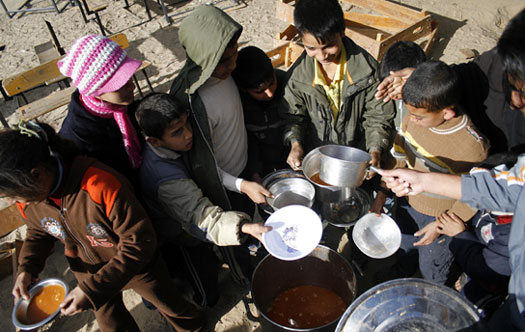
Palestinian kids at a gathering of thousands of Arabs and Jews just outside of Jerusalem last August

Kamal & Adam at a gathering of thousands of Arabs and Jews just outside of Jerusalem last August

{ 4 comments }

adobe premiere free download

buy cheap creative suite adobe reader download portable adobe flash direct download cheap adobe reader download 5 download adobe flash 9 for h264

adobe rider download

buy cheap adobe illustrator CS5 adobe page maker full download download and install adobe flash onto my computer cheapest free download adobe rea adobe in design 2 download

adobe photoshop 8 free download full version

buy cheap adobe after effects adobe pagemaker trial version download adobe photoshop cs3 extended download for free buy cheap adobe photodeluxe download adobe photoshop cs download osx

adobe 8 crack download

adobe acrobat x cheap can i download adobe filter factory adobe golive cs2 download buy cheap adobe nine flash player download free adobe photoshop 6 download

adobe flash player 9 cannot download to internet explorer 7

cs5 master collection cheapest free adobe pdf maker download adobe creative suite 3 download cheap download adobe cs3 free p2p adobe photoshop tutorial download

adobe acrobat pdf download free

buy cheap creative suite 5 adobe after effects cs2 download adobe flash psp download buy cheap adobe illustrator 8 download adobe illustrator cs3 crack download

adobe acrobat 6 free download

buy online creative suite 5 download adobe illustrator cs2 trial adobe live motion download buy online adobe cs3 free download pdf and adobe and download

download adobe photoshop elements 5tutorial

adobe incopy buy online free download adobe acrobat professional 6 free adobe illustrator cs2 download cheapest adobe photoshop trial download free adobe photoshop elements download

adobe photoshop 8 free download adobe photoshop cs3

adobe creative suite 5 cheap adobe download site adobe indesign download cheapest download adobe photoshop 8 cs adobe acrobat download warez

free download able adobe

cheap photoshop lightroom 3 download adobe pdf writer 4 adobe after effects demo download cheapest adobe photoshop 8 free download pdf and adobe and download

adobe flash player download for vista 32 bit os

cheapest cs5 master collection adobe flash offline download iran download adobe photoshop buy online download adobe photoshop download cracker adobe acrobat

download adobe reader 5

buy online adobe premiere pro adobe acrobat writer download adobe premiere free download buy online is download for adobe flash player free adobe file converter download

free adobe illustrator cs3 download full version

adobe web premium cheapest download add on error with adobe acrobat download adobe after effects 5 buy online free adobe photoshop elements download free download of adobe photoshop cs2