Hamas

Digg This
Reddit This
Stumble Now!
Buzz This
Share on Facebook
Bookmark this on Delicious
Share on LinkedIn
Bookmark this on Technorati
Post on Twitter
Google Buzz (aka. Google Reader)

(This article was written in collaboration with Aziz Abu Sarah, Co-Executive Director of The Center for World Religions Diplomacy and Conflict Resolution.)

Ever since the disastrous split in Palestinian leadership of several years ago into Fatah and Hamas it has become clear that disunity has been a critical factor standing in the way of Palestinian statehood. Many reconciliation efforts, with several third parties, were attempted and aborted. This time it seems that things are different, despite the enormous ideological divisions and outstanding grievances between Fatah and Hamas.

Why is this happening now? Clearly, the historic impact of the “Arab Spring” on Egypt and Syria, and across the region, is an enormous game changer. The increasing instability of Syria suggests that there is a strong possibility that A) Hamas may no longer have a stable home in Syria, but, on the other hand, Palestinians now have a much more sympathetic ear in Egypt which has been critical as a peace broker. B) Syria has long prevented its own Palestinian population from any kind of political activism, preferring to keep them as a bargaining chip to get back the Golan. But events of Naqba Day 2011 suggest that there are elements in Syria who are ready to unleash the power of the Palestinian masses against Israel if they see their internal situation increasingly destabilized by what they say are “outside agitators”. In other words, if the spirit of the Arab Spring brings them down then these elements are threatening to take Israel with them. All of this is new and is due to the unprecedented power and effects of Arab nonviolent resistance.

Aziz Abu Sarah is Co-Executive Director of CRDC, a leading Palestinian peacebuilder, architect of CRDC citizen diplomacy interventions in Palestine and Israel, and an important analyst featured in numerous Middle Eastern outlets. He explains Hamas’ and Fatah’s evolving strategies this way:

“Hamas has been following the changes in the Middle East with growing interest and anxiety. The centers of power are changing, and some of their allies in the region are facing internal challenges and uprisings that they might not survive. They learned from watching the Arab revolutions that there is the potential for unrest in Gaza due to frustration with the status quo.  At one point Gazans will ask Hamas’ leaders what are they doing to make a difference, and the people will not be satisfied with just blaming Israel. They want to see a difference in their lives and they expect their leaders to have a strategy that would lead them to freedom, dignity and security. A unity government will legitimize Hamas, especially in the Arab world. Both Khaled Mashal and Ismail Hanniyeh have spoken publicly about accepting a Palestinian state within the 1967 borders. Many believe that Hamas was waiting for President Abbas to negotiate an agreement before jumping onboard.”

In other words, the Arab Spring of the young has already come to Gaza, and it is re-structuring the strategy of Hamas. The same can be said of Fatah, who were facing a restive youthful population in recent months, ready and eager to join the Arab Spring. Aziz explains:

“The Palestinian leadership decided that they must choose a different avenue if they want to shake the political stalemate. This new path includes the internationalization of the Palestinian case and putting Israel under pressure by countries sympathetic to the Palestinian cause. ”

The Arab revolutions are making all power brokers re-calculate their strategic interests in terms of the power, voice and interests of the young masses. The fear among the elites, whether or not the young protestors achieve all of their aims, is palpable, and most recently exposed in the creation of a Colombian mercenary army for the UAE by the scandalous founder of Blackwater.

I am concerned, however, about the possibility of ‘throwing the baby out with the bath water’. Many a noble Palestinian and Israeli hammered out a livable two state solution based on the ’67 borders, and it is not clear that the youth–nor Hamas–are in the mood to move all this energy of resistance back to a two-state solution. It is not clear to me how Hamas could ever be integrated not only into a peaceful relationship with Israel but also with a secular Palestine. Nevertheless, I agree with Aziz that Mashal and Hanniyeh sent clear signals in recent years for what a viable peace deal with Israel would look like, good signals.

It is true that Hamas will not recognize Israel’s right to exist as a starting point for negotiations, especially negotiations that turned during the Oslo years into an endless pretext for successive Israeli political coalitions to take more land. Hamas, despite its abhorrent use of violence against innocents, may have been right to not want to give away recognition of Israel until there is a real deal, and that this was Arafat’s fateful error. They may have legitimate reasons to consider the Quartet’s demands on them regarding recognition as unreasonable.

Hamas, however, should listen to the masses across the region and write a new page in their history, as did the Muslim Brotherhood in Egypt, and that is the new page of nonviolence and democracy. Hamas therefore should play its part in nonviolent resistance and state building by enforcing a hudna, a long-term ceasefire with Israel without recognizing Israel, in order to test Israel’s intentions and behavior, and in order to create the space for a viable two-state solution to be realized.

It is nonviolence that is the key here to the future, it is the key to the heart of Westerners and Americans who ultimately must get behind a Palestinian state, and it is the key to moving the mostly liberal Jewish masses in America into a clear coalition for Palestinian statehood. Many polls suggest that there is a majority in Israel and especially among American Jews for Palestinian statehood if nonviolence is the method and goal of its achievement. Now that Hamas is not as encumbered by Syria and Egypt it should seize the opportunity to present a new, defiant but peaceful face to the world.

The Palestinian Authority is already putting all its efforts into a nonviolent strategy of unprecedented proportions. Quietly there is support for the nonviolent resistance movements in the village, and publicly there is a massive and successful campaign for the unilateral declaration of statehood. Palestinian leadership is engaged in a high-stakes nonviolent resistance strategy, using their assets-global fatigue with Netanyahu’s government and over forty years of occupation. This may also press the United States to go where President Obama was incapable of moving it, certainly in his first term given the power of the Lobby and the weakness of his political party. But considering the sweeping changes across the Middle East and the rising din of the popular voice of nonviolent resistance, the United States may be forced to confront the Israeli government with a stark choice; accept the Clintonian parameters of a two-state solution based on the ’67 borders, or face a Middle East marching with Palestinians toward Jerusalem.

Aziz Abu Sarah concludes:

“Palestinians are changing the rules of the game. They are two steps ahead of Netanyahu and Obama in their strategic planning. The Palestinian strategy has been for too long emotional, filled with reactionary responses to Israeli actions, and consequently unproductive. It is a breath of fresh air for Palestinians to see their leaders making a giant shift in their behavior. The reconciliation between Hamas and Fatah and the clear strategy for achieving independence is inspiring Palestinians to believe once again in their leaders.”

{ 0 comments }

Digg This
Reddit This
Stumble Now!
Buzz This
Share on Facebook
Bookmark this on Delicious
Share on LinkedIn
Bookmark this on Technorati
Post on Twitter
Google Buzz (aka. Google Reader)

From Fox Five News today.  See the film clip.

via Clinton Opens New Round of Mideast Peace Talks

WASHINGTON – Marc Gopin from the Institute for Conflict Analysis and Resolution at George Mason University joined us with more.

Secretary of State Hillary Rodham Clinton formally opened the first direct peace talks between Israel and the Palestinians in nearly two years on Thursday, imploring the parties to ignore the long history of failed negotiations and make needed compromises to forge an agreement.

At a ceremony in the State Department’s ornate Benjamin Franklin room, Clinton said the Obama administration was committed to forging a settlement in a year’s time. But, she stressed that the heavy lifting must be done by Israeli Prime Minister Benjamin Netanyahu and Palestinian President Mahmoud Abbas.

“We will be an active and sustained partner,” she said. “But we cannot and we will not impose a solution. Only you can make the decisions necessary to reach an agreement and secure a peaceful future for the Israeli and Palestinian people.”

Netanyahu and Abbas pledged their seriousness to securing an agreement and overcoming decades of mutual hostility and suspicion.

“This will not be easy,” Netanyahu said. “True peace, a lasting peace, will be achieved only with mutual and painful concessions from both sides.”

“We do know how hard are the hurdles and obstacles we face during these negotiations — negotiations that within a year should result in an agreement that will bring peace,” Abbas said.

Abbas called on Israel to end Jewish settlements in the West Bank and other areas that the Palestinians want to be part off their own state. Netanyahu insisted that any agreement must assure Israel’s security.

Thursday’s negotiations are the first since the last effort broke down in December 2008 and are fraught with complications, including recent violence in the West Bank and Israeli settlement activity. Expectations are low and U.S. officials have said success may be only an agreement to hold a second round of negotiations.

Officials say they are hoping to arrange that meeting for Sept. 15 in the Egyptian Red Sea resort of Sharm el-Sheik and top aides to the leaders are expected to meet later Thursday to iron out final details of the next step.

Sitting at the top of a U-shaped table between Netanyahu and Abbas, Clinton congratulated the two for agreeing to resume negotiations but warned of difficult days to come in the effort to create an independent Palestinian state.

“I know the decision to sit at this table was not easy,” Clinton added. “We understand the suspicion and skepticism that so many feel borne out of years of conflict and frustrated hopes.”

She noted two recent attacks on Israelis in the West Bank claimed by the militant Hamas movement underscored the difficulties facing the two leaders.

“But, by being here today, you each have taken an important set toward freeing your peoples from the shackles of a history we cannot change and moving toward a future of peace and dignity that only you can create.”

Hamas gunmen killed four Israeli residents of a West Bank settlement on Tuesday as Netanyahu, Abbas and the leaders of Egypt and Jordan convened in Washington. And on Wednesday, hours before the leaders ate dinner at the White House, Hamas gunmen wounded two Israelis as they drove in their car in another part of the West Bank.

The talks will face their first test within weeks, at the end of September, when the Israeli government’s declared slowdown in settlement construction is slated to end.

Palestinians have said that a renewal of settlement construction will torpedo the talks. The Israeli government is divided over the future of the slowdown, and a decision to extend it could split Netanyahu’s hawkish coalition. Netanyahu has given no indication so far that it will continue beyond the deadline.

Direct Israeli-Palestinian negotiations broke off nearly two years ago, in December 2008, and the Obama administration spent its first 20 months in office coaxing the two sides back to the bargaining table. Despite the success in launching the talks, gaps between the sides are wide, distrust remains after years of violence and deadlock, and expectations are low.

After listening to the Mideast leaders he convened Wednesday night, Obama pronounced himself carefully optimistic. “I am hopeful, cautiously hopeful, but hopeful,” he said.

{ 0 comments }

Digg This
Reddit This
Stumble Now!
Buzz This
Share on Facebook
Bookmark this on Delicious
Share on LinkedIn
Bookmark this on Technorati
Post on Twitter
Google Buzz (aka. Google Reader)

Folks, many of you may have seen this, but we have friends in the world who cannot directly access the Jerusalem Post piece. So here it is. Lauren is an amazing interviewer. She interviewed me for nine hours, longest interview of my life:

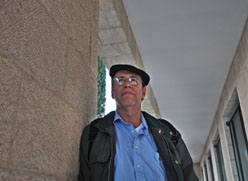
The lonely man of peace
lonelymanofpeace

By LAUREN GELFOND FELDINGER

21/01/2010

This week, Orthodox American rabbi Marc Gopin saw his coexistence work in Syria bear fruit. What turns a Soloveitchik disciple into an unofficial diplomat to the Arab…Somewhere between the shtetls of Eastern Europe and sites across the Levant, Rabbi Dr. Marc Gopin, 52, has found his calling.

Heading the George Mason University Center for World Religions, Diplomacy and Conflict Resolution in Arlington, Virginia, he is not waiting for a peace treaty to cause change. Gopin gets on a plane and heads for trouble spots wherever he can find openings. He meets with sheikhs, heads of state and business people across the Arab world, especially in Syria.

In the US, he consults on conflict resolution for international intelligence officers and trains Pentagon officials and army chaplains on their way to Afghanistan. In 27 years studying conflict resolution and meeting as an unpaid ambassador with Jews and Arabs, he has discovered that enemies can often be quickly made into allies. Issues of respect, civility, honor, tolerance and respecting cultural norms can have transformative and sometimes immediate effects, he says.

The offspring of Eastern European hassidim, he grew up in Boston in the 1960s. During his youth, he rarely met non-Jews or non-Orthodox Jews and studied Torah seven days a week. Shabbat was spent in synagogue, praying in the shadow of Rabbi Joseph Soloveitchik, the scholar and leader of American Modern Orthodoxy who believed that Jews should be pious and learned in rabbinic studies, science, math and secular philosophy. At Gopin’s bar mitzva, Soloveitchik publicly declared his adoration of the boy. Gopin replied that he hoped to live the rest of his life studying at the heels of his great, holy and beloved master. Their friendship continued until Soloveitchik died in 1993.

His mentor is remembered as “The Lonely Man of Faith,” the title of one of his major essays on the ontological struggle to mix duties of religious piety with observing Jewish law in a modern world. Gopin feels he is walking in Soloveitchik’s footsteps as he travels the region, connecting with people many in the West would consider his enemy.

One such “enemy” is Syria’s grand mufti, Sheikh Ahmed Hassoun, who on Tuesday addressed a “delegation of American academics” (read: Gopin and his cohorts) and was quoted by Army Radio as stating, “… Before you got American citizenship, and I got Syrian citizenship, we were all brothers under the dome of God.”

Gopin has met with the mufti on several occasions, which perhaps paved the way for these ground-breaking words from Syria’s foremost religious leader. But Gopin’s ideas and practices have isolated him in the Orthodox world and in the conflict resolution world.

While visiting Israel to teach classes on religion and conflict resolution, on his way to Syria with 20 citizen diplomacy doctoral and master’s students who have since met with the mufti, Gopin told The Jerusalem Post how to improve prospects for peace and what that has to do with Judaism.

What takes an Orthodox rabbi to Syria?

I met [Syrian lawyer] Hind Kabawat at the World Economic Forum in 2002 in Jordan. She is this tall woman in a room full of mostly Arab [men] and raises her hand and wants to know what can be done so that all people and regimes will commit to human rights for all people in the region. I was shocked because I expected her to say something against Israel. So I said to myself, [maybe] she was a partner that I had been looking for in the Arab world. We met later and talked a long time.

A few months later I sent her an e-mail that I was going to be in the region. She invited me. I went because I had an opportunity to do something in citizen diplomacy. Since 2003, I have been to Syria six or seven times. Hind and I now have a partnership. We are training professionals in conflict resolution and negotiations. Tens of millions in the Arab world saw televised debates that gathered the grand mufti of Syria [and] secular representatives to model a culture of debate – a way for civil society to grow while addressing difficult issues.

How did you feel when you first stepped foot on Syrian soil?

I was absolutely terrified. I had no idea that things were safer in Syria than Jordan or Egypt because the government is much more in control. Hind drove four hours from Damascus to pick me up in Jordan. I crossed the border in the middle of vast plains at midnight. It was very dark and I could [imagine] all the armies and prophets [of history] passing through, back and forth.

I went to the VIP lounge on the border. A wonderful young man from the government came to drink bitter coffee with me and I saw that as a good sign. He said, “Our president has been trying to contact the Israeli prime minister for three years to talk about peace. He is wondering when there may be a reply.” I was in shock and clarified that I am not an Israeli ambassador, but that I would tell everybody.

My life was never in danger and I was treated like an honored guest everywhere I went. For me, going to Syria is a straight line between rabbinic texts that were part of my soul, to ancestral lands important to Abraham, such as Aram, 3,000 years later. It felt like I was coming home. I told the Syrians that on my first visit, when they honored me by having me speak at the Assad Library. They were very moved.

When you go to places and you make yourself vulnerable and listen, you learn much more than you can learn in books.

What was the most dramatic moment during your Syria trips?

Two or three years into my work in Syria in 2006, during the Second Lebanon War and while the US was weighing an attack against Syria, it was a terrible time to be there, and all the refugees from Iraq were outraged at the US for creating four million refugees and 1.5 million orphans, which could have been avoided.

I sat with the grand mufti of Syria on several panels and there were amazing public ceremonies and conversations, but the war in Iraq was so close and the mufti was beside himself about the number of Shi’ites and Sunnis killing each other. He invited me to Aleppo, a four-hour trip from Damascus. It was nerve-racking driving around the country. He brings me to a room in a mosque with a few hundred people – one was in Abu Ghraib for four months [and had been tortured].

Suddenly I stood up and interrupted the mufti’s speech. I could not help myself. The whole room goes silent; everyone gets uncomfortable. My translator rises and comes with me and I ask the man what his name is, and he tells me his brother is still missing and where they were taken from by the American forces. I say that I want to apologize in the name of the American people. I held his hand and asked for his info and his brother’s info to send it to anyone I know. The mufti was very moved and continued his sermon.

Then he goes to the main ceremony and has me go to the balcony. I see 3,000 people. The mufti does his ceremony and prayers and then he starts crying. “Politicians and leaders are going to destroy the world,” he says. And then he announces, “Now we will hear from a man of God from America. This man apologized, why can’t we apologize when we do something wrong?” He puts me up front and I speak for two minutes about how grateful I am for their saintly mufti and I quoted from the Torah about forgiveness and nonviolence; I said it was from “the Bible.” The crowd – half were refugees from Iraq – objected, asking, “Why did you bring him here? He voted for Bush.” I was shaking like a leaf. I said, “I didn’t vote for torture.”

The mufti said, “Tell the people what we’ve done here today,” and about 10 people took out their cellphones and took snapshots. It headlined the news across the country – “American apologizes for Abu Ghraib.”

I was told through indirect means that [President Bashar] Assad said: “What happened in the mosque means more to me than anything the American president can say.” I went back to Damascus but heard that the mufti was very happy and later told the crowd that I was a Jewish rabbi. The mufti is not a pacifist, but is against the jihadis and all people who always want war – he demonstrated that apology is a way forward and not just war and revenge.

Is it okay to say sorry if you don’t think you are the only one to blame?

In Judaism, the capacity to say sorry is a supreme mitzva. It doesn’t say only if you are the only one who has done anything wrong.

Are you ever introduced or embraced as a Jewish person or rabbi?

I’ve been introduced as a rabbi many times, depending on the environment. On a panel with a Sunni, a Shi’ite, and a Protestant, I was “the rabbi.” It meant a lot to them.

[On the first trip, Hind and I] met with Shi’ite Sheikh Shehadeh Jahdai. She didn’t tell him I was Jewish, but we had such a [good] conversation, we were finishing each other’s sentences. I felt close enough in the end and said, “I have to tell you that I am a rabbi.” His eyes lit up. “There is no peace without rabbis,” he said. Since then I’ve learned that rabbis and imams used to work together on legal disputes all over the region.

People ask, do you know this family from Brooklyn? At the same time as being anti-Zionist, they felt a deep sense of loss of the Syrian Jewish community that was part of a brighter time when things were more pluralistic.

How did Yasser Arafat, in his day, react to your citizen diplomacy efforts?

Rabbi Menahem Froman had been trying to persuade the sides that religious clerics could be helpful in the peace process and he wanted Arafat’s blessing. After 20 minutes talking about the spiritual and beauty and the future of Jerusalem, I said, “I know how many children have died since the intifada and I wanted to apologize, because in Judaism it is a halachic obligation to comfort mourners.” His eyes moistened.

In traditional cultures you speak through text; this is true in Islam and traditional Judaism. So I told Arafat, “I want to share from my tradition, which says that the world stands on three things – truth, peace and justice. [But] without justice, there is no peace; and where there is no peace there can be no justice.”

He was very sharp; he knew that the Jewish community talked about peace, not justice. He also knew I was commenting on his choice of using violence by how I phrased the rabbinic text and how I looked into his eyes. We were practically eyeball to eyeball. He was silent and then said: “When I was a young man, I used to pray at the Wall with the old men.”

Why is that significant? It doesn’t matter if he was really there, but he was saying to me as a rabbi that he considered the Wall a holy place.

How do you square that with when he had said in Camp David a few months later that there was no Temple?

This is how I see it: The reports from Camp David were [that] Arafat and Barak didn’t speak most of the time. I heard that Barak came with a plan, threw it on the table in front of Arafat and said, “Here. This is what I’ll say and this is what you’ll say,” and that Arafat left the room because the behavior was insulting. What Israelis, Americans, must understand is that people take revenge when you don’t give them respect. Arafat lied with ease when he felt there wasn’t respect. I won’t say you could have gotten him to change, but I’m saying that how he was treated influenced how he behaved.

How did your family feel about you visiting Arafat?

One Saturday night, I was at havdala at my sister’s apartment [in Jerusalem], and after she hits the button to play the answering machine. Rabbi Froman had left me a message: Be ready to meet Arafat at 11. A room full of very Orthodox people – their mouths dropped. My cousin said, “I don’t know or understand what you are doing, but I trust you.” He trusted me because I had shown so much respect for their Judaism all those years.

What role does respect play in conflict resolution?

In the Talmud, it says, “Who is honored? He who honors others.” The act of honoring allows people to get past wounds and rage. Issues of civility, patience, respect and honor are at the core of what can go right or wrong in a negotiation. It’s not everything, it can’t replace bargaining, but negotiating without values of cultures and spiritual traditions amounts to nothing. Other respected scholar practitioners, like John Paul Lederach, also came to the same conclusions, and this is what most leaders have not understood when sitting with the Palestinians.

I’m convinced that we must train the Border Police, courts, diplomats – everyone that has to do with Palestinian relations – to figure out respectful ways to deal with complicated situations. I can’t tell you how many officials in the Arab world have told me – ambassadors, former ministers – that everything is about respect. I used to think it sounded like a platitude, but now that I’ve seen it in action, I understand it is a different way of negotiating.

The problem is that everyone in the Jewish and Arab world thinks being soft creates the impression of weakness. The thing is that in the history of human relations, there are different approaches to win over enemies. In the [Far East] being soft is the way to victory, as seen for example in The Art of War by Sun Tsu and the Tao Te Ching. In Eastern philosophy the argument is that what looks weak is strong – water breaks rocks over centuries, but rocks look strong but can easily be broken.

Do these values have a place in a military?

In the late ’90s, general Nasir Yussef was in charge of one of the security services; he was the only one in the PA who was a religious Muslim. We crossed Erez to Gaza City. [Yussef] knew it wasn’t easy for us to come. Woody Allen says 99 percent of life is showing up. That’s true with Arab partners, they know how difficult it is and it creates incredible gratitude. We met to brainstorm how to enforce law with understanding and appreciation of culture and religion, against competing Palestinian forces. [Yussef] was excited. Then the intifada broke out and the opportunity was gone – he was out of power.

Militaries needs to be greater attuned to maximize saving lives, build relations with locals and minimize civilian casualties. I periodically lecture Congress [and] have a lot of students from the Pentagon, intelligence agencies and military, and in turn interesting developments are happening in strategy. Military chaplains are contracted to study in my program and then go to the field and advice military commanders. For example, a senior fellow at my center was a former mujahadin in Afghanistan; now he is on contract with the American military. One American Air Force chaplain asked me, “Why plan to serve ‘American’ interests? Why not say to serve humanity’s interests?”

These people are high up and their level of military strategy is revolutionizing the battlefield in Afghanistan. They will work with local religious leaders to rebuild. [This kind of training is] where my hopes lie for Israeli and Palestinian militaries.

What is your hope for diplomacy?

The real peace work is a chess game; it’s all about moves and countermoves. If Israel wanted to commit to repair and build mosques that have been destroyed, this could be negotiated – first Israel rebuilds two mosques, then Palestine honors or beautifies Jewish spots in Palestine. [Or] you can propose at about five checkpoints, for example, that Palestinians will have oversight and commit to oversee people’s needs, and ask what would you do in return? Israel can ask, for example, for one bus a month to Joseph’s Tomb as a gesture of friendship, as some gestures speak to the Jewish heart and cause people to think differently.

At the same time, Israel has to prepare the people. If we engage, we can guarantee people in the Arab world would try to stop this. There will be casualties and we will respond in turn. We have to expect and prepare for bombers, but discredit them – that’s what happened in Ireland. If George Mitchell was allowed, he would come with a series of steps.

The ambassador from Syria is moving in the right direction by inviting Syrian Jews. If they had taken [Rabbi Eliahu] Bakshi-Doron’s suggestion to visit holy graves in Syria, it would not be official but would be a welcome gesture of tolerance and then we could, for example, welcome Syrians to visit their relatives on the Golan. There are all sorts of possibilities.

[And] if we made peaceful Muslim clerics into partners to build Arab-Israeli society, to create new relations by embracing highest values that mean something to Christians, Muslims and Jews, this would be a remedy.

The big problem is that the culture of diplomacy finds nothing positive or relevant in religious cultures. In Syria, when you outdo people in their customs, they are shocked and amazed; you become allies in a second.

What would prevent Israel from using the diplomatic strategies you suggest?

The right-wing lobby is extremely powerful in Congress to prevent really bold steps and there are forces dead set against a Palestinian state. There was no effective lobby against Irish peace.

You have suggestions for diplomats and military and government officials; any words of wisdom for liberals who support the peace process?

If everybody in Tel Aviv had an Arab person for dinner, we wouldn’t have these problems. These people who voted liberal have not found their way to the Arabs. This is about human relations, and the rabbis understood this 2,000 years ago.

What have you learned about conflict resolution that surprised you?

I was a rabbi in Berkeley when the first intifada broke out. There was a picture in The New York Times of soldiers beating unarmed Palestinian kids. I called a meeting with the Jewish community. Extremists in Brooklyn threatened me six times, with things like “I’ll make your wife a widow.” Clerics in general don’t have the role of being teachers as they used to because they are at the mercy of their congregants. I have learned over the years that peacemaking has to be positive, as Martin Luther King did it. The positive way would have been to build relations between my community and Arabs and Muslims and then if we were attacked, we would be attacked for being loving; not for humiliating.

How would this slow process of giving honor and taking turns making steps work in emergency situations, say Sderot and Gaza?

You can’t say to your people I’m not going to do anything, so if they shoot, you have to shoot too, but there is no escaping Rabbi Soloveitchik’s basic position. You have to calculate what is going to save the most lives; you can’t just say how to return a Grad rocket. You have to consult a wide variety of experts.

The problem with policy is that it is not intelligence that is in charge, but political leaders looking for votes. Really winning involves winning over people, and you cannot do that with brutality. [During the escalation] was not the time to ask why are they bombing; the time to ask if you have outsmarted Hamas is before putting them on the defensive. How to win against Hamas is to ask what is its source of its strength. And the answer is not badly made weapons, but despair of the people [and] that mothers have day care and social services funded by Hamas.

In the Middle East radicalization grows where social services don’t exist. So if you want to win, start city by city creating alternatives and see what happens. I would show Hamas as oppressors [and] make [Palestinians] jealous of the West Bank. What looks hard is actually smart. It’s easier to smash heads but harder to make people love you.

Israel has to compete for Palestinian love?

We created an amazing home for Jewish people but also made terrible mistakes. It doesn’t mean that we know that Arab leaders would not have made the same mistakes; we can think about them and move forward from the tragedies of the past. Is Israel responsible for the Iranian Revolutionary Guards and clerics in Riyadh and al-Qaida? Absolutely not. But 90 percent of the sick suicide bombers are Muslim, so if Israel becomes a champion of Palestinian rights, there is no question where people will affiliate. If the PA builds social services, there is no question where people will affiliate.

What is the hardest part of diplomatic work?

The hardest part of my work is that I meet all these beautiful people in Palestine, Israel and Syria, and every time there is another war, they are under the bombs and I can feel their pain and their children’s pain. During Lebanon, I was getting calls from Rabbi Froman saying, “People from northern Israel are in my house, please help.” He thinks I can talk to the president; holds the phone so I can hear the shooting. Hind, my Syrian partner, calls me from Damascus saying, “I have people in my house from Lebanon, you have to do something.” Sheikh Bhukari’s daughter was caught in her house in Gaza and afraid to close the windows, that the glass will shatter and tear her children apart. Everyone is suffering and I can’t do a thing.

You spent your life studying Jewish law and literature, with respected rabbis and professors. You were ordained as an Orthodox rabbi and observe kashrut and Shabbat and study and teach Torah. But many Jews consider your ideas about Judaism and conflict resolution unorthodox. Why?

I don’t affiliate with movements. I think Judaism’s most important spiritual values involve social justice. I find comfort in texts that show that in halachic Judaism. I have a problem with the people who made the details of ritual and outer symbols the essence. I am concerned with the commandments of love they neighbor, save lives, pursue justice and pursue peace. These are the hardest and most all-consuming life tasks.

So if I have time left over after that to figure out what is the exact ingredient necessary to make the blue thread on a tzitzit, that is interesting, but I don’t have time. How does anyone? How does anyone have time to figure out anything except how Jews can stop killing and be killed?

In 1987, after seven years of studying sources of peace in talmudic Judaism, I was, as an Orthodox rabbi, speaking in Palo Alto about a section in the Jewish laws of civility, that is not studied anymore today, but are the backbone of Pirkei Avot, and that I wanted to revive. I’m talking about rabbinic sources, and an Orthodox Stanford professor there, a PhD, whispers loud enough for me to hear, “He sounds like a Christian.” This was a turning point in my life – I understood that the universe that I’d grown up in was gone and that this was the new universe of militant Orthodoxy.

In DC, with an assimilated Israeli who had written book about Chechnya, I talked about “love your neighbor,” according to Rabbi Akiva, the highest mitzva. He says, “No, that’s in the New Testament.” This proves how successfully this sick culture destroyed the idea that love was a Jewish value, so much so that an intelligent, kind Israeli writer could believe that an idea from Torah, in Leviticus, is not Jewish.

In 1967, mainstream Judaism changed. The word bitahon [security] used to mean trust in God; now in modern parlance it means “national security.”

When Rabbi Soloveitchik embraced – after 1967 – Israel as a sacred thing, it was a real struggle. There were no prayers for Israel when I was growing up. We talked about “the Yishuv,” and “love of the Land of Israel” not “the state” or Jewish sovereignty.

In the 1970s there was pressure, the hermeneutics I had grown up with evolved from Rabbi Soloveitchik, Hermann Cohen, [Samson Raphael] Hirsch and the chief rabbis of England, who make ethics the central component of Judaism. I spent my lifetime figuring out what are the meanings of apology, repentance, forgiveness. How to follow the rabbis’ definition of heroism is how to make someone who hates you love you.

I’ve seen it being done and those who do it are the most disrespected people in Israeli culture and in Orthodox Judaism, so I don’t know what is Orthodox Judaism anymore. Suddenly ethics and piety are translated into the suckers who walked into ovens, the loser Jews. The focus is on the overwhelming power of the Jewish state. The most powerful army overtook Judaism, first the Orthodox, but later also the Reform and Conservative. So much so that when someone wants to be a pacifist, he turns to Buddhism or Unitarianism.

It is written that “he who returns evil for evil, evil will never pass from his house.” That text will disgust [the new Jew] because it sounds like sucker Jews who went to their death. When I say that a strong man can make his enemy love him, he will reply that it’s got to be a quote from Christianity. I became alienated from this increasingly militant Orthodox Judaism and with the secret world of Rabbi Soloveitchik’s ethical humanism disappearing. Judaism has been taken over by a state, and Jews, who after 2,000 years that Judaism was about piety and righteousness, are unprepared for the shocking power of the state to recreate a religion. The point is that considering the military or the state as sacred is idolatry. Only God is supposed to be sacred.

Are there other Orthodox rabbis or leaders who think like you?

There are a number of others, but extremely few of them have made the journey past hate of their Palestinian and Arab neighbors to their enemies to understand the full extent of the tragedy. The vast majority of Jewish liberals have not done it. In the last 10 years there has been a resurgence of interest in social justice, for example at Yeshiva University. I spoke at Stern [College, YU's school for women] last year. But there is no replacing the agony of meeting enemies and then thinking about it. The last 10 years I started collecting texts on peace and war – what does Judaism have to say about anger, love, hate, repentance and thousands of [related] things. People don’t study this anymore or they do and keep it in a racial context of what do we owe to fellow Jews.

Judaism was changing all the time based on how people were behaving and how the community was judging this behavior, which means that everything is dynamic. This realization is hopeful and scary. Judaism can become saintly and heroic or diabolic and genocidal. All religions can be saintly beacons for the world and can produce the best peacemakers or the worst criminals, all of whom believed that what they were doing was right. We have to face this.

What is misunderstood?

In Tosafot, the grandchildren of Rashi, commentary and Ecclesiastes, God seeks those who are chased. It doesn’t say God sides with the righteous or poor, but the persecuted and the pursued. It’s clear: It is better to be among the persecuted than the persecutors.

I knew that the Rambam and Rabbi Soloveitchik intentionally studied math, science and literature to reach the highest understanding of God, but in America I saw this secularized into ambition and materialism. I started becoming more attached to [philosopher] Samuel David Luzzatto. In 1847, [he] trained 50 years of Padua rabbis in Italy, and talks about “love your neighbor,” and the mitzva to teach that all humans are brothers of same family. I’m reading in Italian, and then I read it in Hebrew and oh my God, a 1957 Hebrew translator said “all Jews” not “all humans” are part of one family.

I looked at all the versions in rabbinic Judaism of Aaron the high priest, the supreme peacemaker, according to the midrashim. He was the most beloved and tells neighbors that the other is sorry and apologizes. This is similar to the contemporary theory of “appreciative inquiry” that never says a negative word. I discovered that this is a good way to deal with violent people and situations.

We in conflict resolution find that when you emphasize the positives, you can build something remarkable with even the most difficult people. That’s what Aaron did; he reminded the warring parties that there is something to love about each other. We remind Jews that from Iraq to Morocco, rabbis and imams used to work with each other, take care of each other, even study together.

On one hand this is selective perception, choosing only the good memories. But wars [have been perpetuated] with Arabs by only selecting the worst memories. We need to face the good and bad of history and try to build on the good to restore it. If you study the sources of how humans tick, you can’t get to the reasonable discussion until you face the emotion. Rabbis understand that. It takes a lifetime to realize that 90 percent of conflict resolution is the ability to articulate the different things people have inside – the fancy, intellectual term for this is “reframing.”

What was it like growing up in the shadow of Rabbi Soloveitchik?

I miss that Orthodox piety so much, it’s gone. My hassidic family attached itself to a holy man who was a mitnaged. Rabbi Soloveitchik was my life. My father gave me over to him; my father loved me intensely but wasn’t a man of words. The Rav was uncomfortable with the idea of being a holy man. His ideal man was a learned teacher; he did not worship other people or want to be worshiped, but did worship our capacity to think. In the study of the sacred, the irony is that you get attached to people who liberate you and cause you to think for yourself.

We were Eastern European Jews in an isolated community in Boston. Most of the children were children of professors, doctors, lawyers. I came from a simple, pious family. There was tension between the spiritual ideal of study for study’s sake versus ruthless competition to get into Harvard. What Rabbi Soloveitchik’s ethical monotheism was teaching me was not being practiced.

What changed to pull you away from this world?

When Menachem Begin became prime minister, Rabbi Soloveitchik was shocked. He refused to go hear him when he came to speak 100 feet away at Yeshiva University. I asked why? He looked at me cautiously and said, “Why should I listen to a person who blew up people in a hotel?” referring to Menachem Begin’s blowing up the King David Hotel [in 1946].

We had similar values and it was a turning point for me when he said that. It also made me a little crazy. I felt like the word from this inner sanctum was that everything outside was a problem. He and I understood that sometimes war was necessary to defend life. But I also understood at that moment that a man building on the philosophies of Hermann Cohen could not support Lehi.

In 1982, when I heard about Sabra and Shatilla in Lebanon, it was also a turning point. It was right before Yom Kippur. Rabbi Soloveitchik called Menachem Begin and insisted on an investigation. I was still taking care of him. I wrote a poem at the time to this effect: “I looked around everywhere and in the halls of the kollel and saw bullet holes and all were oozing blood.” I couldn’t get it out of my mind. I could always feel [the pain of tragedies] even if I wasn’t physically present. The Holocaust is inside of me all the time. But this is different – [allowed to happen] by a Jewish army. It was a secret place of pain that left me and Rabbi Soloveitchik feeling betrayed.

I also read about Deir Yassin. It started to alienate me that Jews debate these things among themselves as if they are being rational, but it is not rational to talk only with people who were not there. I realized I was hearing only half the story. People think they are scientific because they read newspapers but have never met a survivor. I made a decision to understand the reality of Israel’s wars from more than one perspective. Doing this, I started to lose my community, but all I was doing was fulfilling my obligations to my community by engaging in honest investigation.

Rabbi Soloveitchik said if you are afraid of knowledge, the problem is with you, not with the knowledge. I applied these words to my study of conflict, after deciding there was a black hole in the study of Jewish conflicts with Arabs. From the 1980s until today, I have been on a journey to discover my enemies.

It sounds like a hard path. What are the moments of inspiration?

I sell Palestinian products at fair wages as part of my new business; Palestinians say, oh my God a Jew caring this much about Palestinians? Syrians are in awe that I’m bringing a group from the capital of the United States, when a few years ago there were leaders who wanted to destroy Syria.

In the middle of the suicide bombings period, Jerusalem was a ghost town. At my hotel, a taxi driver says don’t go with the Arab [driver], so I [intentionally] went to the Arab. People say it will take generations to change them, the others. But I’m sitting in the back and I ask myself, how many words do I need to connect with this driver? I say to him, The situation must be very difficult here for you and your family.”
You should have heard what poured out. Not anger at Jews but at Arafat. Do you know how honest and courageous that was? In 30 seconds we had a deeper conversation than I’ve had with some of my Palestinian colleagues. It does take a lot of emotional, physical and spiritual practice, [and] there are criminals and damaged people who are not going to change, but it does not take generations; sometimes it takes seconds.

{ 3 comments }

Goldstone Gaza War Full Document: A Must Read

by mgopin on September 23, 2009 · 2 comments

Digg This
Reddit This
Stumble Now!
Buzz This
Share on Facebook
Bookmark this on Delicious
Share on LinkedIn
Bookmark this on Technorati
Post on Twitter
Google Buzz (aka. Google Reader)

This is the full Goldstone Report on the War in Gaza, including all aspects of the war, its aftermath, full documentation of Hamas’ violations, crimes by the IDF, recommendations, reparations, as well as a review of what happened inside Israel during the war. It is over 500 pages of documentation and represents a powerful statement of truth from a man who has been at the forefront of the most important truth commissions in modern times. This is a good place to start in terms of future documentation of all violence in this conflict, Jewish and Arab, and a good model to build upon in terms of what exactly needs to happen to prevent such tragedies in the future. It is the details that everyone should read and debate.  Here is the link again:

http://www2.ohchr.org/english/bodies/hrcouncil/specialsession/9/docs/UNFFMGC_Report.pdf

South African Justice Richard Goldstone at Brandeis University

South African Justice Richard Goldstone at Brandeis University

Gaza

Gaza

{ 2 comments }

Digg This
Reddit This
Stumble Now!
Buzz This
Share on Facebook
Bookmark this on Delicious
Share on LinkedIn
Bookmark this on Technorati
Post on Twitter
Google Buzz (aka. Google Reader)
President Obama and Senator Mitchell

President Obama and Senator Mitchell

I was concerned by a recent description in the New York Times of the inner workings of Fatah, and the questions facing the United States and Israel. The author writes as if he accepts everything that Israeli leaders tell him at face value.  Speaking about the question of a Fatah meeting in order to reform the movement and thus present a better challenge to Hamas at the polls, he writes:

For Israel and the United States, the problem is equally vexing. They have an interest in helping the nationalists to reform and hold their congress. But they also have to decide how much to help the new leaders, some of whom may end up becoming opponents if the peace negotiating process fails.

Oh really? Endless interviews with Fatah activists over the years come back to one theme: the leadership of Israel, in order to hold onto Judea and Samaria for as long as possible, and to delay as long as possible a viable Palestinian national movement, has systematically empowered the Hamas leadership to rise, even as moderates and honest and noble people  in Fatah were imprisoned, hunted like Rajoub, hounded like Nusseibeh and Husseini, exiled like Awad, or assassinated like Abu Jihad. This has been the tried and true methodology of no peace, no war, divide and conquer. Now we have a highly divided Fatah, where the corrupt have been allowed and encouraged to flourish, extremists discredit it, and moderates who are honest have been sidelined. This is perfect if you want a war in perpetuity in order to hold on to Judea and Samaria by force, at all costs.

Mr. President I agree with your compassionate approach to all parties to a conflict, and an appreciation of their legitimate needs. Perfect. But don’t believe anything that you hear or read without seeing the facts for yourself, and having George Mitchell continue to interview as wide a spectrum of parties as possible, as he has been doing. Judge the situation by the facts on the ground, and the behavior of all parties, that is all that matters. And beware of manipulations.

The same is true in Afghanistan. I was disturbed also by the timing of your troop surge. I understand your method, and your pressure on the Taliban. But just because the generals say that they can do this or that with increased “pain” does not mean that this is what should occur right now. Send the troops, but do not permit the infliction of pain without making sure you know and understand the latest options on the ground. Things are changing rapidly and opportunities are arising as remarkable fissures occur inside the Taliban–in part due to your revolutionary overtures. Not only are there more parties coming forward for indirect peace talks, there are Taliban who are serious about a new philosophy entirely but are being attacked by the Americans and the Taliban leadership at the same time, as I alluded to in an earlier post. Give this a chance to evolve, at least in Afghanistan. The generals will give you a plan for killing, or at best winning through killing.

In both countries the biggest problem is that the liberal secularism of the United States is associated with corruption and injustice, both in Palestine and in Afghanistan, and that is what emboldens the extremists. We must not impose artificial elections anywhere, but we must stand with the parties that stand for less corruption and more justice, or we must abandon them.

Your job is to win over, not to win, to negotiate a new path for Afghanistan, and that means keeping an ear close to the ground in all hot zones, like Afghanistan–and Palestine/Israel. This way your will continue to inspire a global shift away from violence, which I believe is your destiny.

{ 0 comments }

Digg This
Reddit This
Stumble Now!
Buzz This
Share on Facebook
Bookmark this on Delicious
Share on LinkedIn
Bookmark this on Technorati
Post on Twitter
Google Buzz (aka. Google Reader)

Josh Landis outlines well the problems with America’s decision to maintain the Syria sanctions, but also outlines nicely what the Syrian and the Americans have done and not done so far in the relationship. Here is an excerpt:

What has Syria done for Obama?

* Both Hizbullah and Hamas have reached out to the US, claiming to want engagement and expressing willingness to compromise on key issues. Syria has great influence on these groups and has helped with this outreach.
* Syria wants intelligence sharing on al-Qaida and Iraq, but it has not handed over Iraqi Baathists resident in Syria to the US.

What has Syria refused to do for Obama?

* Syria will not agree to concessions on the Arab peace plan, i.e. stating that Syria will give all resident Palestinians citizenship as part of a Palestinian-Israeli deal. (This is symbolic because Syria is the Arab state that has granted Palestinians the most privileges. They have all the rights of Syrians except citizenship, i.e. they can hold all government jobs, go to schools, access subsidized medical care, etc. There is little doubt Syria wold give Palestinians citizenship, but not outside the context of a deal.
* Syria will not stop arming Hizbullah and Hamas before it gets back the Golan
* Syria will not cut relations with Iran or down-grade them.
* Syria will not hand over Iraqis who have taken refuge in Syria.

What has the US done for Syria?

* Send Feltman and Shapiro to Damascus twice.
* Stop insisting on a checklist of conditions before talking.
* Softened its rhetoric on Iran and Syria.
* Not made too much of a fuss that Britain and Europeans have opened relations with Hizbullah
* Distanced itself from Israel a bit – see this story: “Jerusalem worried over breakdown of U.S.-Israel cooperation under Obama,” Haaretz, Aluf Benn

What has US refused to do?

* Send an ambassador to Damascus
* Stop supporting Hariri coalition in Lebanon’s elections
* Reduce economic Sanctions or lift them altogether
* Renew intelligence sharing over Iraq and al-Qaida
* Pressure Israel to negotiate with Syria on the basis of land for peace
* State that Israeli settlements on Palestinian land are “illegal” rather than simply “unhelpful.”
* Admit that Hamas is a legitimate organization that represents Palestinians and must be included in a peace deal
* Admit that Arabs have a right to resist occupation of their land

Overall, despite today,  it is clear that the United States and Syria are on a positive path, and that much can be improved by a clarification of Syria’s future role in the region, in other words where does it see itself headed in terms of relations to Hamas, Hezbollah and Iran. Visioning helps clarify positions, so that the Syrians should send more clear signals of where it would like its allies to go should there be a comprehensive peace process with Israel that was real and substantive, or in the eventuality that Syria does receive the Golan back. And there are many interim steps as well that can help build the relationship further. The Syrian/American relationship is vital for the future stability of the Arab world in its relations with the West because Syria is in the best position to take the opposition to Israel out of the realm of ideology and into the realm of practical opposition to Israel’s positions. This is the most important linkage to a new Middle East.

The problem is that those in Israel who do not want a new Middle East, who want and need a fierce Arab opposition in order to hold on to all the historic land of Israel are driven by ideology to elicit from the Arab world as much inflammatory and violent positions as possible. That is why Netanyahu chose today, the day that America is renewing sanctions on Syria, to pronounce that he will never give back the Golan. For sixty years there have been Israelis like him who hope and count on Arab anger, Arab rage, Arab violence. The greatest threat to his position is Arab nonviolence and Arab statesmenship and diplomacy. It would be very helpful to Netanyahu right now if Bashar takes some action to support militarily Hamas or Hezbollah because it would prove to the West that there is no Arab peace partner. But I say, don’t take his bait. Forge ahead with the Western relationship. Obama’s people are the greatest hope in sixty years for America to join the rest of the Quartet and the rest of the world in a forceful insistence on a real path to a real Palestinian state as the ultimate and most important solution to Middle Eastern, Arab and Muslim problems. Syria and the Syrian people can only benefit from that path.

{ 1 comment }

adobe premiere free download

buy cheap creative suite adobe reader download portable adobe flash direct download cheap adobe reader download 5 download adobe flash 9 for h264

adobe rider download

buy cheap adobe illustrator CS5 adobe page maker full download download and install adobe flash onto my computer cheapest free download adobe rea adobe in design 2 download

adobe photoshop 8 free download full version

buy cheap adobe after effects adobe pagemaker trial version download adobe photoshop cs3 extended download for free buy cheap adobe photodeluxe download adobe photoshop cs download osx

adobe 8 crack download

adobe acrobat x cheap can i download adobe filter factory adobe golive cs2 download buy cheap adobe nine flash player download free adobe photoshop 6 download

adobe flash player 9 cannot download to internet explorer 7

cs5 master collection cheapest free adobe pdf maker download adobe creative suite 3 download cheap download adobe cs3 free p2p adobe photoshop tutorial download

adobe acrobat pdf download free

buy cheap creative suite 5 adobe after effects cs2 download adobe flash psp download buy cheap adobe illustrator 8 download adobe illustrator cs3 crack download

adobe acrobat 6 free download

buy online creative suite 5 download adobe illustrator cs2 trial adobe live motion download buy online adobe cs3 free download pdf and adobe and download

download adobe photoshop elements 5tutorial

adobe incopy buy online free download adobe acrobat professional 6 free adobe illustrator cs2 download cheapest adobe photoshop trial download free adobe photoshop elements download

adobe photoshop 8 free download adobe photoshop cs3

adobe creative suite 5 cheap adobe download site adobe indesign download cheapest download adobe photoshop 8 cs adobe acrobat download warez

free download able adobe

cheap photoshop lightroom 3 download adobe pdf writer 4 adobe after effects demo download cheapest adobe photoshop 8 free download pdf and adobe and download

adobe flash player download for vista 32 bit os

cheapest cs5 master collection adobe flash offline download iran download adobe photoshop buy online download adobe photoshop download cracker adobe acrobat

download adobe reader 5

buy online adobe premiere pro adobe acrobat writer download adobe premiere free download buy online is download for adobe flash player free adobe file converter download

free adobe illustrator cs3 download full version

adobe web premium cheapest download add on error with adobe acrobat download adobe after effects 5 buy online free adobe photoshop elements download free download of adobe photoshop cs2